
What Is a Popup? Definition, Types & Examples | Optinify
Popups have a reputation problem. But they're one of the fastest ways to grow your list, recover abandoned carts, and boost sales. Here's what a popup actually is, the types worth using, how triggers like exit intent work, and whether they really hurt your SEO.
Key takeaways
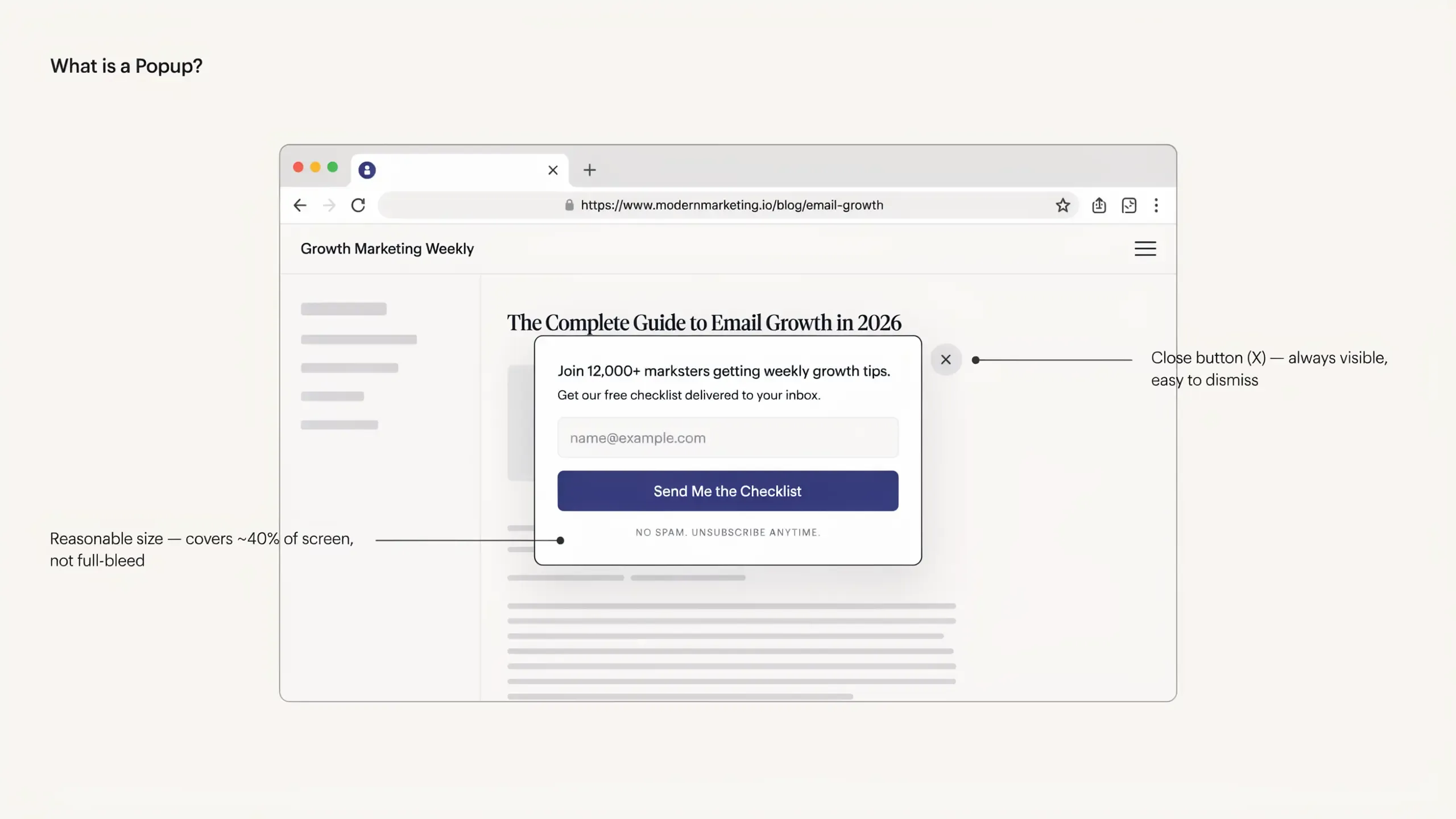
- A popup is a small window that appears on a webpage while someone browses. A visitor's action or a click triggers it
- Popups can show email forms, discount codes, and countdown timers, spin-to-win wheels, surveys, and product recommendations.
- Common triggers are time delays, scrolling, clicks, and exit intent. The right timing decides whether a popup helps or annoys
- Popups do not hurt SEO on their own; Google only penalizes intrusive ads. This includes popups that block content when a mobile page loads
What is a popup?
A popup is a small window or overlay that shows up on a webpage while someone is browsing. Visitors' behavior or a click on a specific page or collection triggers it.
Web developers add pop-ups to websites through a JavaScript snippet. They insert it into the site’s HTML.
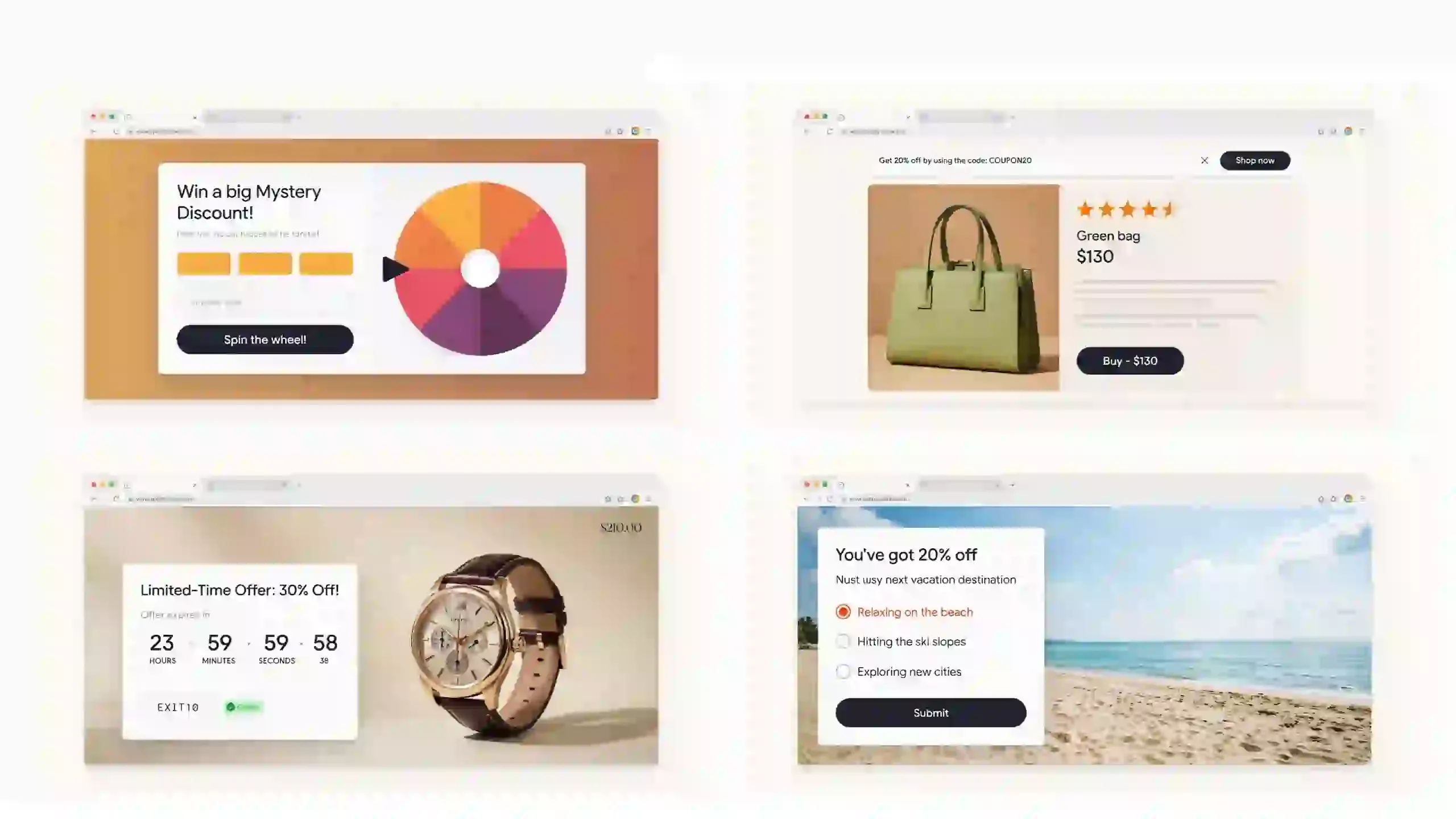
A popup can show almost any type of content, such as:
- Email or phone capture forms to grow your marketing list
- Countdown timers that add urgency to a flash sale
- Spin-to-win wheels that turn signups into a game
- Discount codes and coupons for first-time buyers
- Product recommendations to boost your average order value
- Error messages and system notifications that guide shoppers back on track
- Surveys and feedback forms to learn why shoppers leave
How Do Popups Work?
Website popups trigger based on specific visitor actions.
You set them to appear with little effort after a user scrolls or reads your content. This setup highlights your most important marketing messages immediately.
Why Use Popups in Marketing?
Pop-ups remain the most popular visitor engagement tool for modern eCommerce brands. Different designs serve completely unique purposes for your daily promotional goals.
Spin-to-win wheels provide a fun way to boost conversion rates in a short time.
You can gather emails with little effort or promote flash sales. You don’t need to change your main website design.
Exit intent strategies provide the ultimate safety net for these active marketing campaigns. These windows show up when a user moves the cursor to the close button.
Most brands currently ignore their mobile visitors despite high traffic numbers. You gain a massive competitive advantage when you launch optimized mobile pop-up campaigns.
Do you run a Shopify store? Popups work well there too. You can add one without touching your theme code, then use it to capture emails, run flash sales, or recover carts.
"Popup" vs. "pop-up" vs. "pop up": which is correct?
All three spellings are correct, but you can not use them in the same way.
The right spelling depends on how you use the word in a sentence.
"Popup" vs. "pop-up" vs. "pop up": which is correct?
Which one should you use?
For marketing, SaaS, and product copy, go with popup. This is now the industry standard.
Use pop up when you need a verb.
The hyphenated pop-up is still correct, but it sounds a bit more formal.
Pros and cons of popups
People have mixed feelings about popups, and for good reason. They can make a big difference in results, but they also tend to annoy visitors, even on the same website. Here is a look at both sides.
Where they help:
- If the right popup appears at the right time, it can convert well.
- Popups help grow email lists faster than embedded forms. This makes them a key channel for lead generation.
- They help recover abandoned carts and save revenue that might otherwise be lost.
- Popups place time-sensitive offers right where visitors are already focused.
Where they hurt:
- If popups appear too soon, they interrupt visitors before they are interested, which hurts results.
- Some visitors use ad blockers, so they never see certain popups.
- Popups have a long-standing reputation for being pushy.
- If popups are not built well, they can slow down page loading and make the mobile experience worse.
One well-made popup works better than several generic ones. Many sites run into trouble by showing too many popups too quickly.
Do popups hurt SEO?
People ask about this all the time, so here is a clear answer: popups by themselves do not hurt your SEO. The real issue is with certain types of popups that Google does not like.
What Google penalizes:
- Intrusive popups on mobile devices
- Popups that show up as soon as the page loads
- Popups that cover most of the content
- Anything that makes people hunt for the close button before they can read
Which popups are safe:
- Ones that show up after a short delay
- Ones that respond to what the user does
- Ones that only cover a small part of the screen
- Most modern popup tools already work this way by default
One important exception:
- Legally required banners, like cookie or age checks, are allowed
- This applies even if they cover some of the content
Pro Tip
Check the guidelines of google
Frequently Asked Questions
Final Thoughts on Using Popups
So, that is what a popup is. A simple tool that shows the right message at the right time.
The trick is timing and relevance. Show it too soon, and you interrupt. Show it at the right moment, and you convert. One well-timed popup beats five generic ones.
Popups still work, and they will keep working in 2026. Exit-intent triggers, small banners, and designs optimized for mobile lead the way.
Ready to try one? Build your first popup and see how many visitors you can turn into subscribers.
What to read next
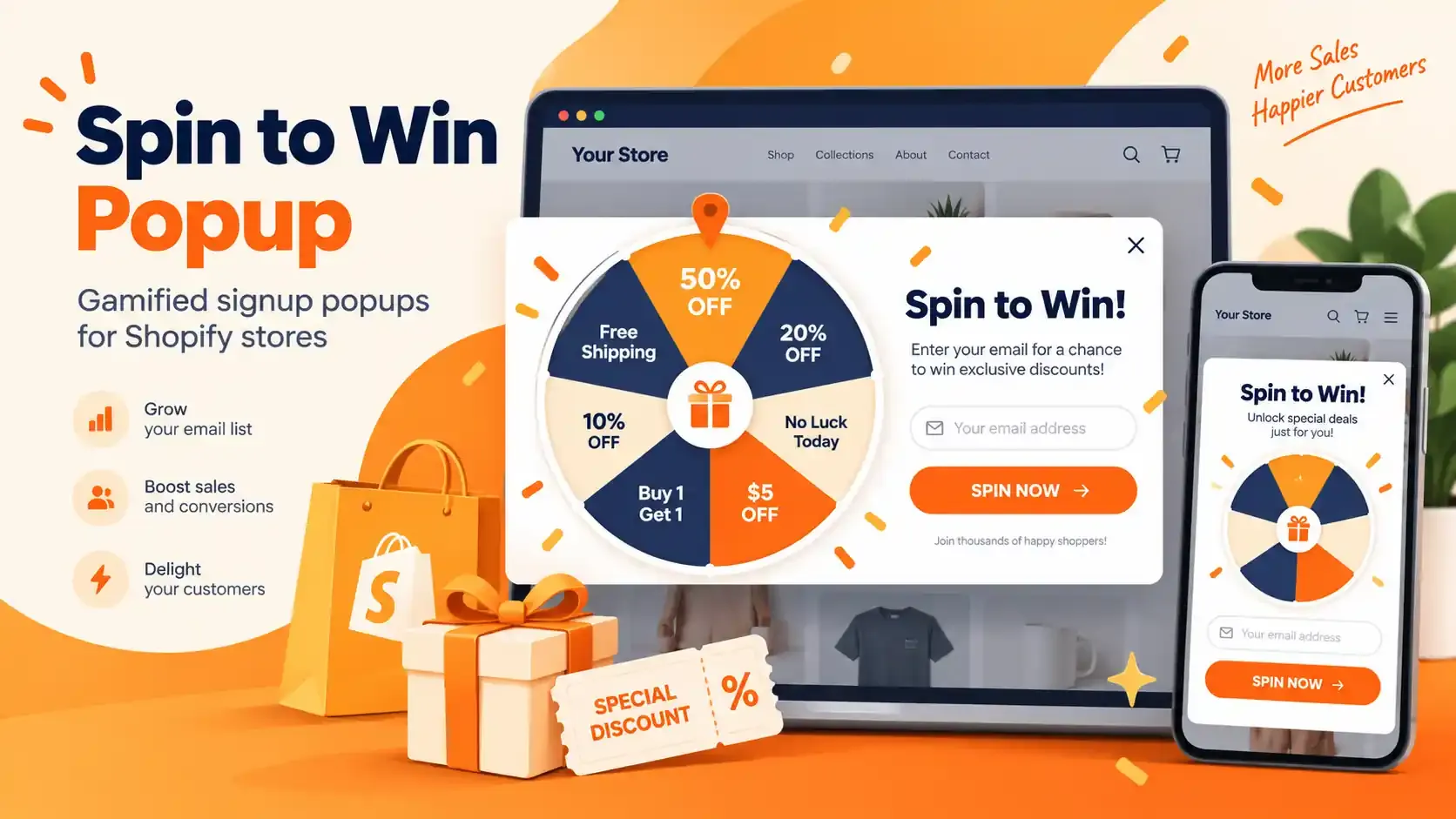
Spin to Win Popup: How Shopify Stores Can Grow Email Signups and Sales
Learn how spin to win popup actually work! Discover the best prizes and perfect timing strategies to boost conversions and grow Shopify sales.
Read Article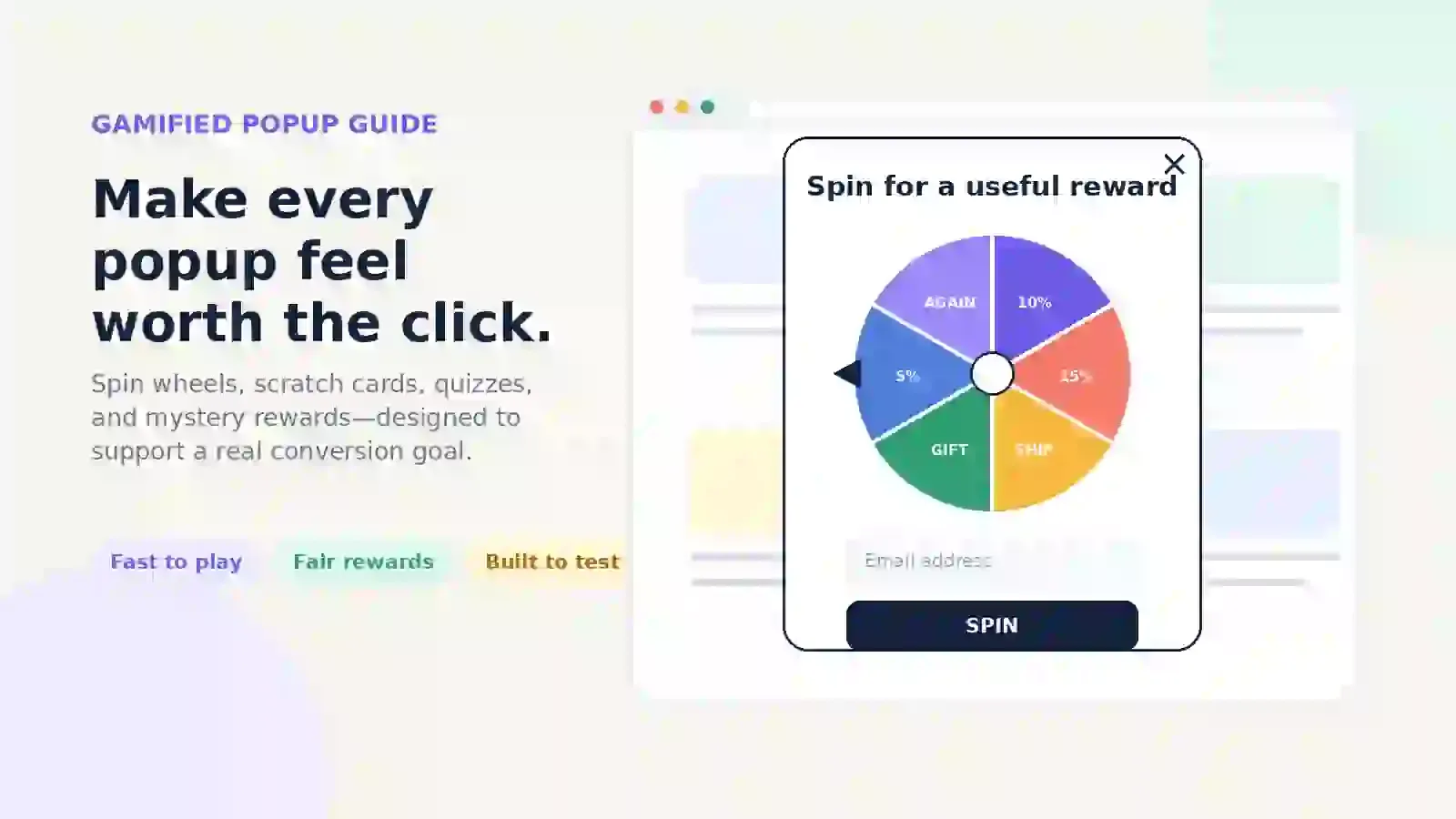
Gamified Popup Guide: Types, Examples & Best Practices
Learn how gamified popup help Shopify stores grow leads and sales. Compare game types, prize ideas, targeting tips, and best practices.
Read Article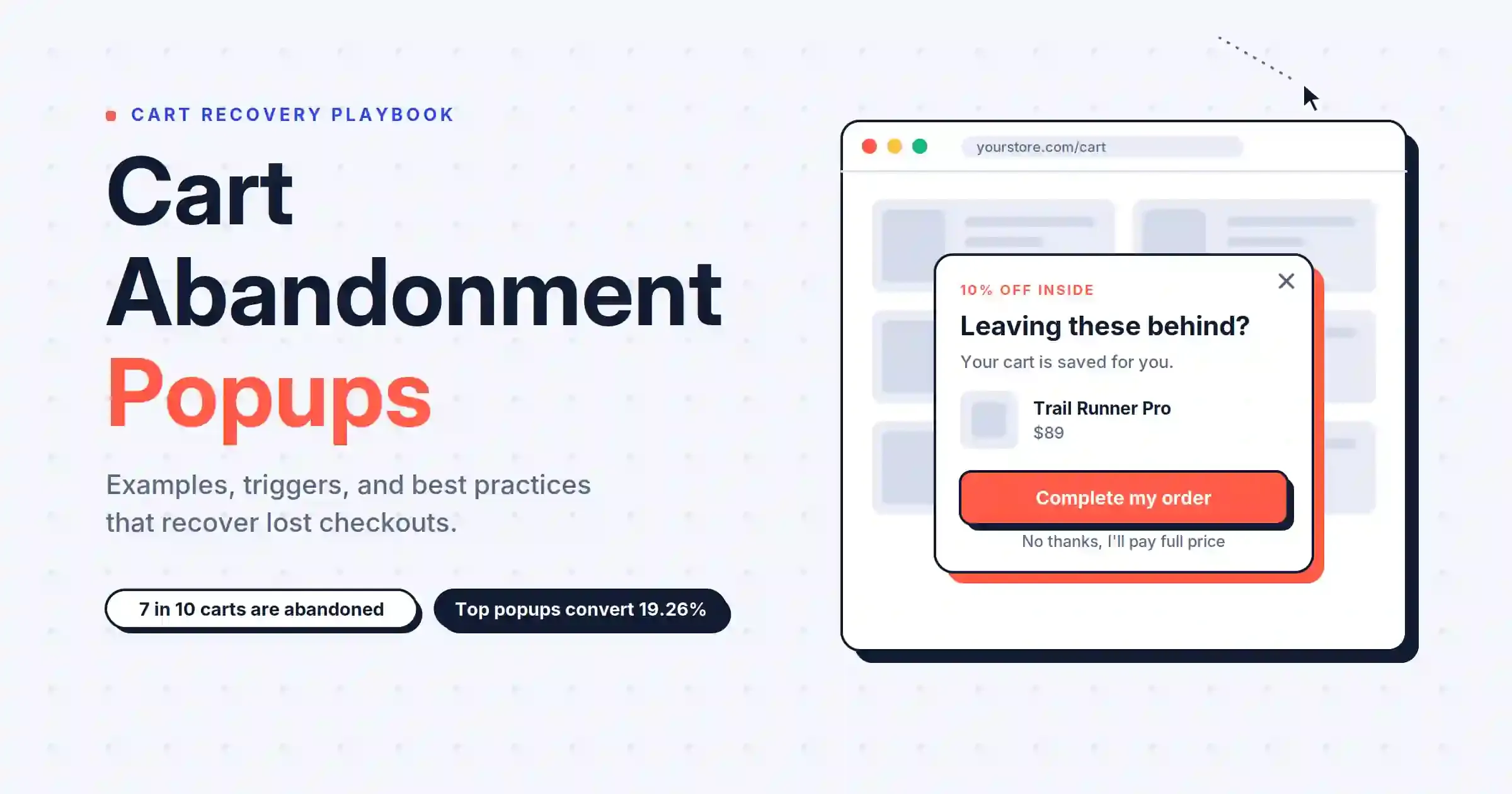
Cart Abandonment Popup: 7 Examples & Best Practices (2026)
Cart abandonment popups catch shoppers before they leave. Get 7 examples, trigger types, discount rules, and copy formulas that convert.
Read Article