

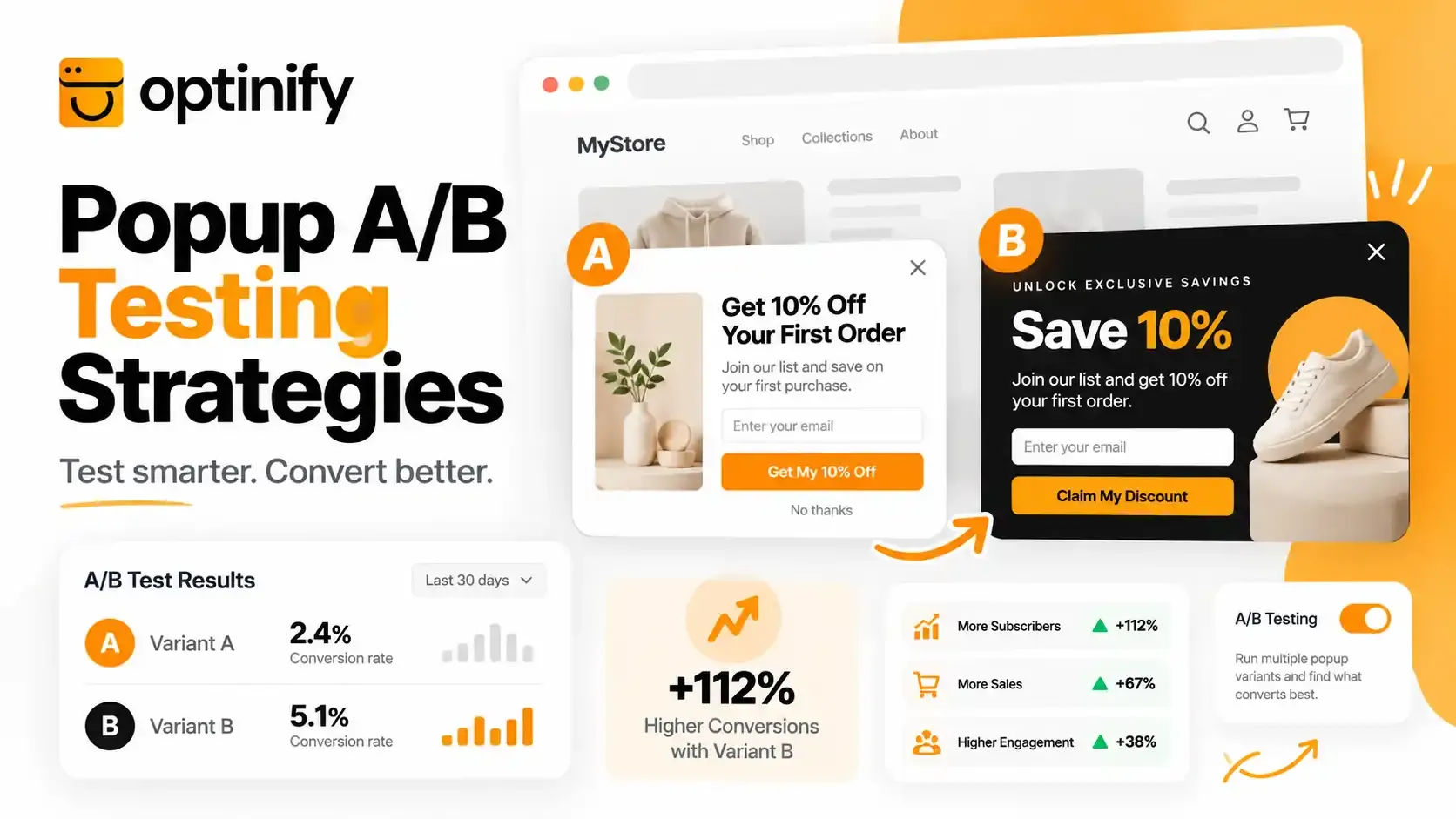
Popup A/B testing strategies help e-commerce brands discover which popup versions generate more signups, clicks, and sales.
By testing different offers, headlines, designs, triggers, and timing, businesses can understand what visitors respond to and improve popup performance using real data.
Running these tests manually can become difficult. Especially when you need to create different popup versions, control when they appear, and compare results. Tools like Optinify help e-commerce brands create, test, and optimize popup campaigns from one place.
What is Popup A/B Testing?
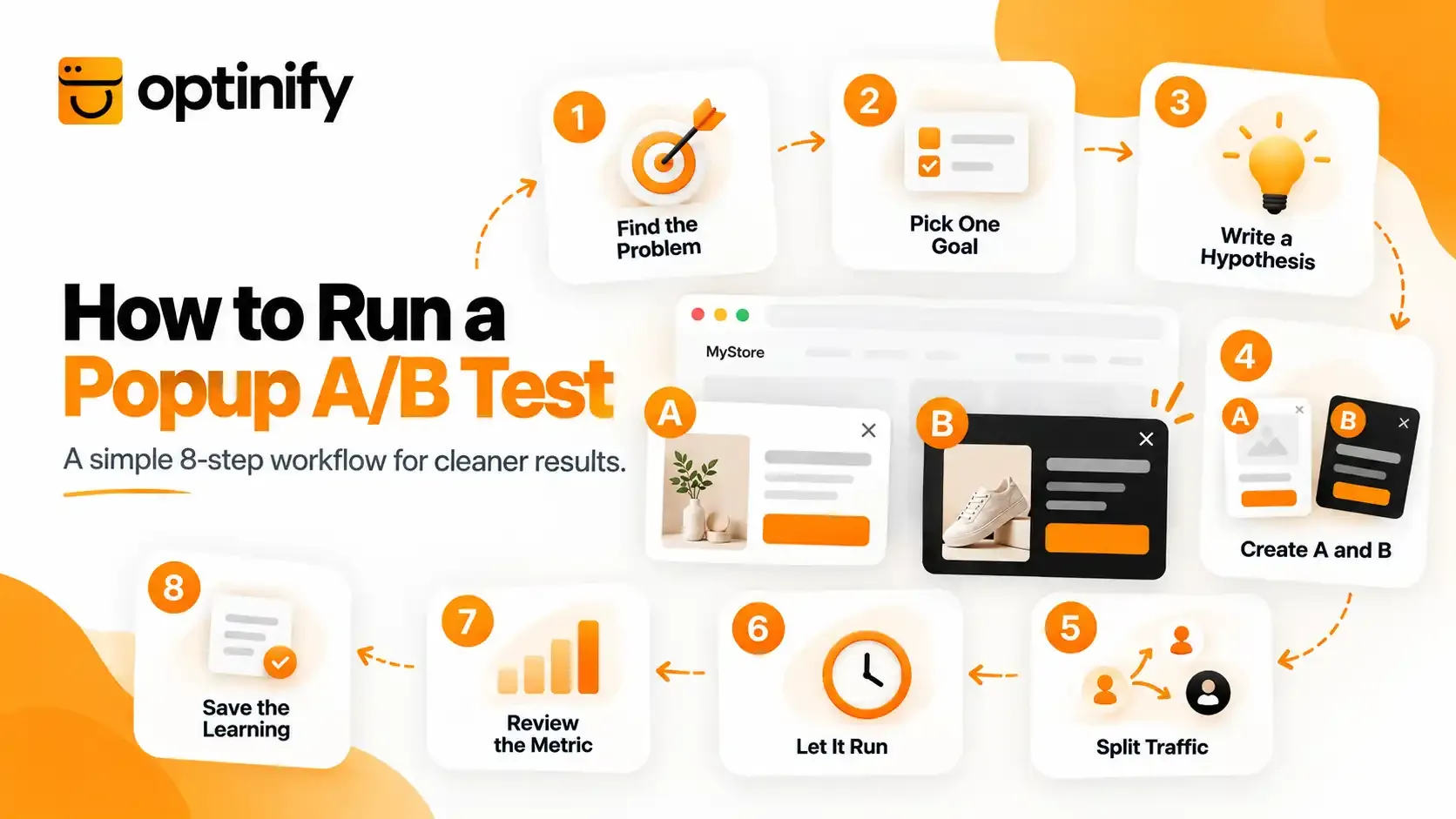
Popup A/B testing compares two versions of the same popup.
Version A is often your current popup. Version B includes one planned change. Now you will compare the results and pick one as the winner.
For example:
- Version A offers 10% off.
- Version B offers free shipping
- Both use the same design, appear at the same time, and ask for the same details.
Popup A/B testing is also called split testing. You can use it for any types of popups. But you can focus on email popups, SMS popups, discount popups, exit intent popups, and other lead forms.
You should know more
With Optinify, merchants can create different popup variations and test elements like offers, headlines, layouts, and calls to action. This makes it easier to understand which popup experience connects better with visitors.
Why Should You A/B Test Popups?
Effective popup A/B testing strategies allow brands to understand visitor behavior instead of making decisions based only on assumptions. A/B testing shows what your visitors actually respond to.
You may like one version, but your customers may prefer different. You can get this specific answer from A/B testing.
Added to that, good popup A/B testing strategies can help you:
- Get more email signups
- Get your SMS list
- Improve lead quality
- Increase popup conversion rate
- Find better offers
- Reduce popup exits
Above all, you can learn what your shoppers want. Based on that, you can replace it with real user data.
What Should You Test First With Popup A/B Testing Strategies?
The best popup A/B testing strategies usually start with high-impact elements that can directly influence conversions.
In my view, the offer, trigger, timing, and your popup headline get more priority than a small design change.
Testing scopes
This order is not a fixed rule. You have to find your own priority.
You should know more
A popup testing tool should make these experiments simple. Optinify allows brands to test different popup elements without rebuilding campaigns from scratch. This helps store owners focus more on learning from customer behavior instead of managing technical setup.
12 Popup A/B Testing Strategies
1. Test Your Popup Offer
Your visitors need a clear reason to give you their email or phone number.
The reason can be a discount, free shipping, early access, a free gift, useful content, or another benefit.
For example:
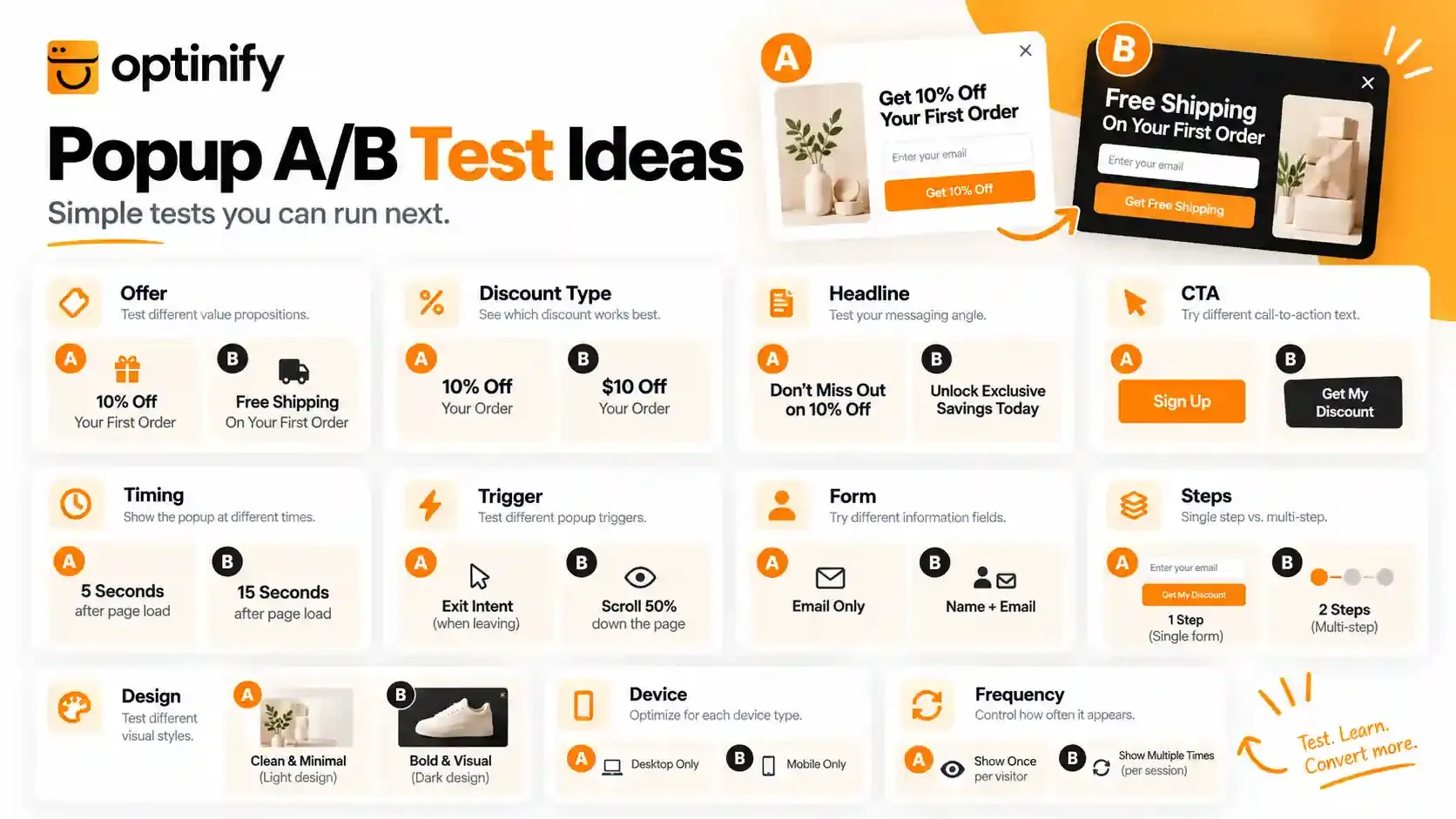
Version A: Get 10% off your first order
Version B: Get free shipping on your first order.
This test answers one clear question: which offer gets more interaction.
Optinify Pro Tip
Check these examples of free shipping popup.
You should know more
Bigger discount may get more leads but less profit. So signup rate should not be only metric.
2. Test Percentage Discounts Against Fixed Discounts
A percentage discount may feel stronger on high-price items. On the other hand, a fixed amount can feel clearer on low-price items.
Test Percentage Discounts Against Fixed Discounts
3. Test the Popup Headline
The headline tells the visitors why they should stop and read.
Instead of testing small word changes, test a clear message angle.
For example:
Version A: Join Our Email List
Version B: Get 10% Off Your First Order
In this case, version B gives a clear reason to act.
4. Test Your CTA Button Copy
A user should know what the button does before they click it.
That is why a clear benefit-based text may feel more useful than the generic one.
Test ideas include:
- Sign Up vs. Get 10% Off
- Submit vs Get My Code
- Join Now vs. Join the list
- Continue vs. Show My Offer
This is the button which tells the shoppers what happens next.
Optinify Pro Tip
keep the button copy short.
5. Test Popup Timing
There is no single best popup delay for every store. Product type, traffic source, page type, and visitor intent can change the result.
The popup that appears instantly may interrupt the visitor. Test clear timing to find the best for your visitor type.
For example:
Version A: Show after 5 seconds
Version B: Show after 15 seconds
Timing can change how a popup feels.
Optinify Pro Tip
Read this guide of google to avoid intrusive interstitials and dialogs.
6. Test Different Popup Triggers
Except timing, a popup can have other triggers.
Common triggers include:
- Is on page (by path only or by full URL
- User type ( New user or returning visitor)
- Device type (laptop/Tablet or mobile)
- Scroll to depth
- Exit intent (For mobile or for desktop or both)
- Based on countries or Shopify markets]
A popup can also appear after any of these actions. These popup A/B testing strategies help businesses identify which visitor triggers create better engagement.
7. Test the Number of Form Fields
Test if more data can causing less sign up or not.
Version A: Email
Version B:
- First name
- Birthday
Optinify Pro Tip
Do not remove a useful field just to increase the signup rate. The right choice depends on what the data is worth to your business.
8. Test One-Step vs. Multi-step Popups
One-step popup asks everything on one screen. On the other hand, multi-step asks step by step.
For example:
Step 1: Want 10% off, Step 2: Enter your email, Step 3: Add phone number for more 5%
This format feels interactive but extra steps can cause drop-off too.
That is why you should know these popup A/B testing strategies.
Optinify Pro Tip
Compare total completed signups, not just clicks on the first step.
9. Test Popup Design and Layout
Test major layout changes instead of tiny style changes.
For example:
Version A: Text and form in the center.
Version B: Product image on the left and form on the right.
Keep the offer and copy the same. This helps you learn whether the layout caused the change.
Optinify Pro Tip
The offer, form, CTA, and close option of your popup should be easy to find. Design matters, but clarity matters more.
10. Test Images Against No Images
Images can help a product offer feel real. This also makes the popup heavy.
If an image gets more signups but makes the page slower or harder to use on mobile, the result needs more thought.
11. Test Mobile and Desktop Popups Separately
Mobile users and desktop users do not have the same screen space.
A popup that looks clean on a laptop may cover most of a phone screen. For that reason, avoid treating both devices as one design problem.
Test things such as:
- Shorter mobile copy.
- Fewer form fields.
- Smaller images.
- Different popup size.
- Different timing.
- Different triggers.
- Easier close buttons.
Optinify Pro Tip
Check this guide on mobile popup.
12. Test Popup Frequency
Frequency controls how often the same person sees your popup.
You could test:
Version A: Show once every 7 days.
Version B: Show once every 3 days.
More popup views do not always mean better results. Too many repeat views can annoy visitors who have already said no.
Popup A/B Testing Strategies and Ideas for Ecommerce Stores
Popup A/B Testing Strategies and Ideas
Optinify Pro Tip
Do not run all these at once. Choose the test that answers your most useful business question.
Which Metrics Should You Track in Popup A/B Testing Strategies?
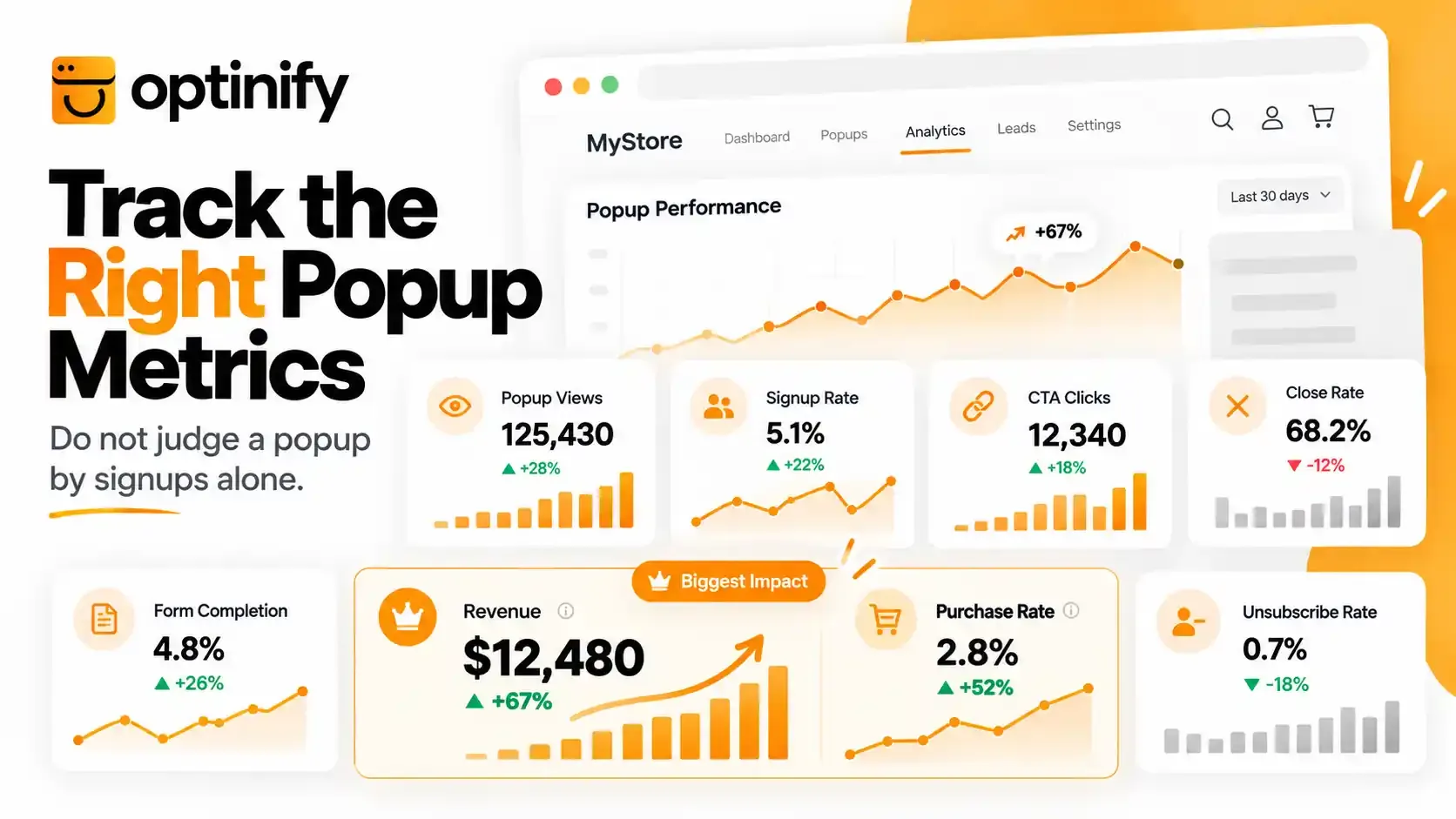
Tracking the right metrics is an important part of successful popup A/B testing strategies because conversion numbers alone do not show the full picture.
The right metrics depend on your goal.
Which Metrics Should You Track in Popup A/B Testing Strategies?
How Long Should Popup A/B Testing Strategies Run Before Choosing a Winner?
There is no fixed number of days that works for every store.
A busy store may collect useful data much faster than a small store. Traffic and conversion volume matters.
Do not call a winner because one version is ahead after a few hours. You should also give the test enough time to cover normal buying patterns. A test that only runs on one busy sale day may not show normal customer behavior.
Common Mistakes for Popup A/B Testing Strategies
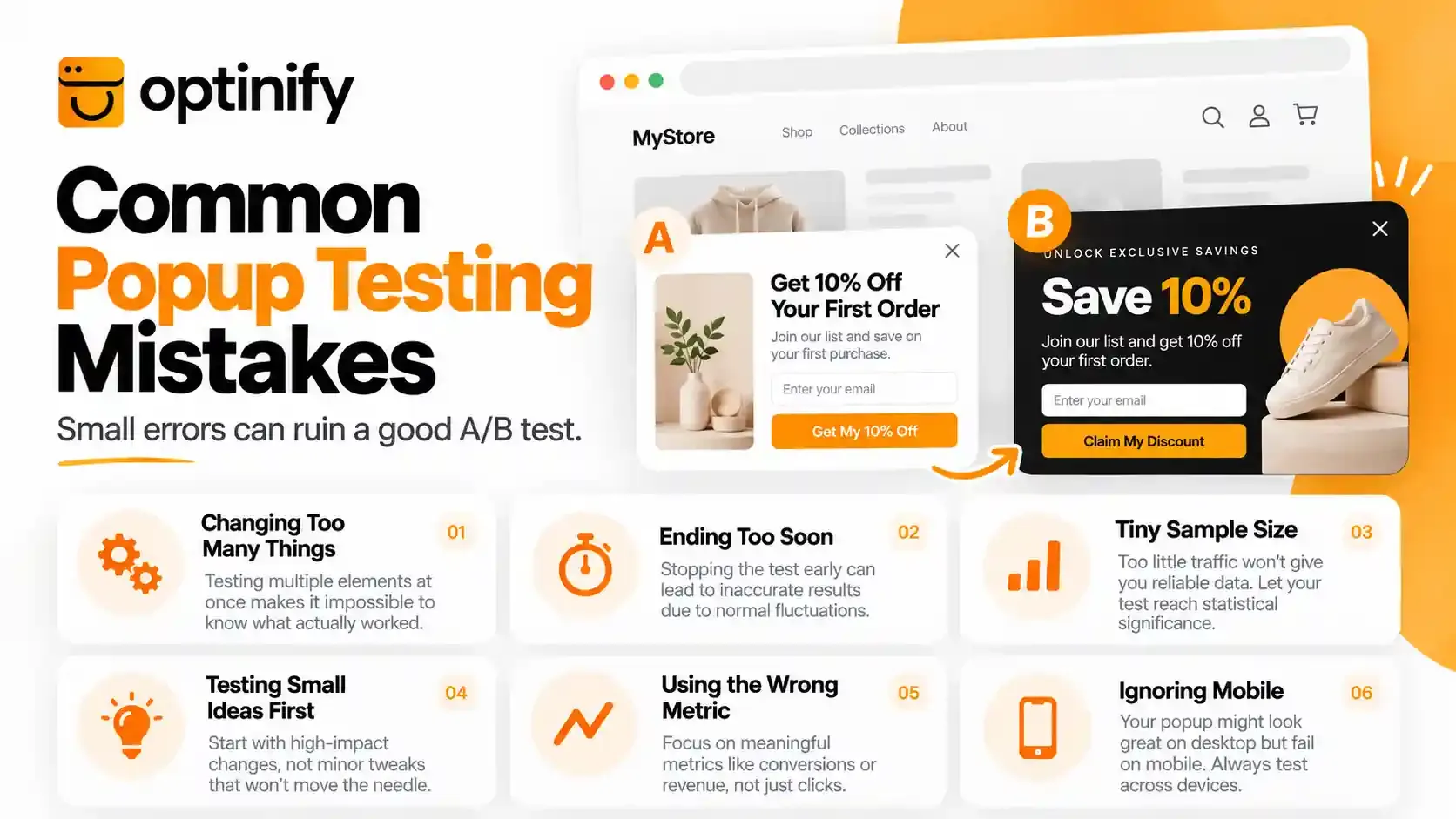
- Changing Too Many Things
- Ending the Test Too Soon
- Using a Tiny Sample
- Testing Small Ideas First
- Using the Wrong Success Metric
- Ignoring Mobile Users
- Comparing Different Traffic Sources
Frequently Asked Questions
Final Takeaway On Popup A/B Testing Strategies
The best popup campaigns come from testing, learning, and improving. Popup A/B Testing Strategies help you understand what your visitors prefer and optimize offers, designs, timing, and messaging for better conversions.
Start with one clear goal, test important elements, and use real data to create popup experiences that generate more leads and sales.